The best body doubling apps for ADHD (2026)
The best body doubling apps for ADHD, compared honestly: Focusmate, FLOWN, Deepwrk, Caveday, Study Together, and free study-with-me streams. Prices checked.

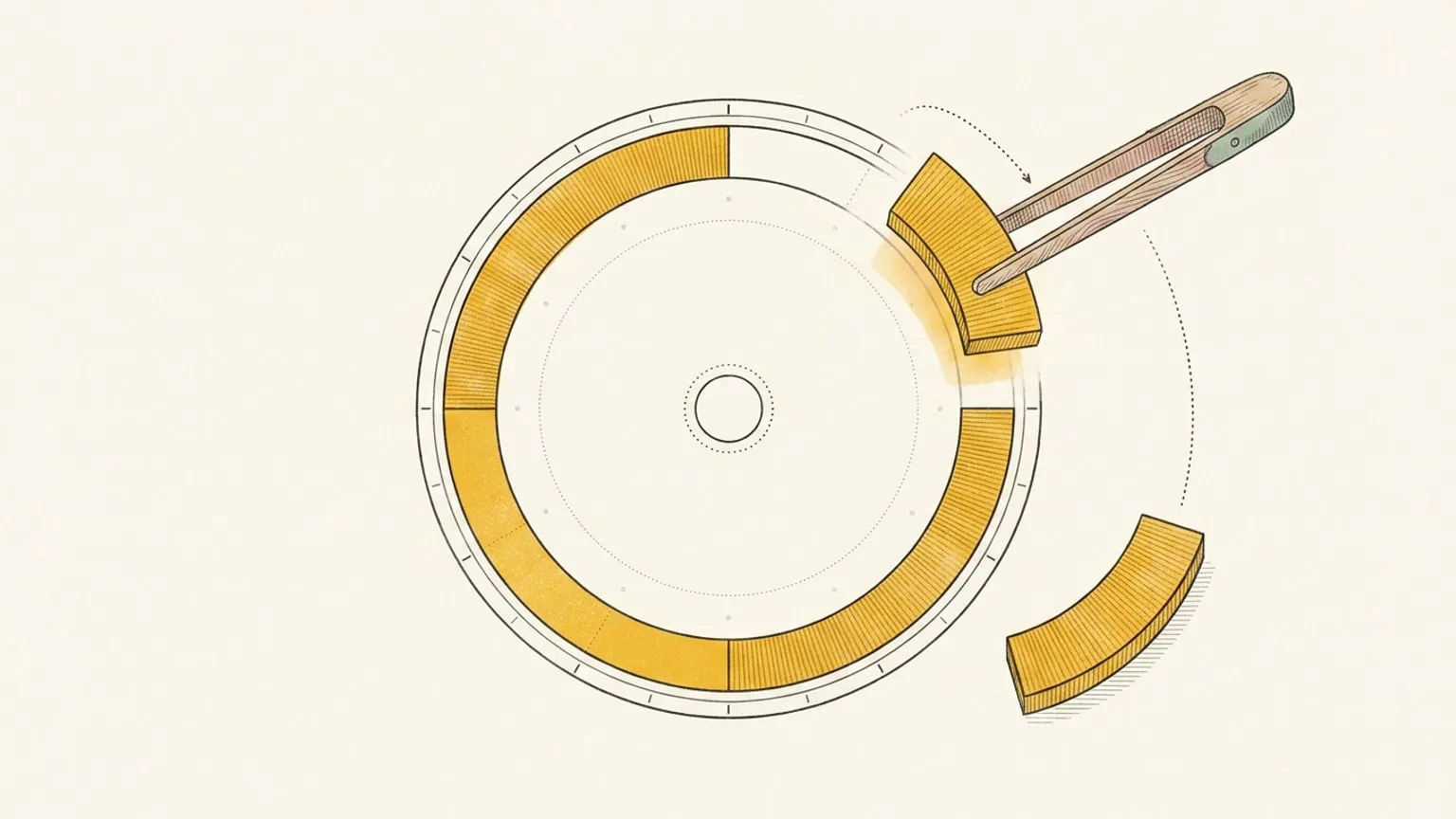
First, the disclosure. Reassign is mine, and it is a day planner, not a body-doubling app. So it is not one of the entries below, and where it shows up at the end, read it with that bias declared. The apps here are the ones adults with ADHD actually name when they talk about working alongside someone, and I have tried to be as honest about them as I would want someone to be about mine.
Now the short answer. A body-doubling app puts another person in the room so you start and stay on task. They differ on one axis: how much of a person you get. One matched partner who books a slot with you. A hosted group in a video room. An open community you drop into. Or a face working on a stream while you work. More presence means more pull, and usually more money. Pick by how much contact you can take today.
What makes a body-doubling app work
Body doubling is a task-initiation tool, not a focus trick. The failure it targets is the gap between knowing what to do and moving, so the test for every app is whether it closes that gap. Three things do:
- A real start time you commit to. A booked session pulls you to the desk, because a moment now exists when you would otherwise drift. The commitment matters as much as the company.
- A person actually present. Live, on camera or in the room, not a recording you can ignore. The 2023 survey of 220 neurodivergent people found the pull comes from someone being there, whether or not they know your task.
- Low enough friction to keep showing up after the novelty runs out. That covers price, but also whether being on camera for an hour costs you more than it gives.
When researchers coded 3,276 r/adhd comments about working from home, virtual body doubling was the single most-named focus strategy, ahead of headphones, timers, and time blocking. Fifty-nine of its sixty-four mentions were app-mediated. People reach for these tools first. The question is only which one fits your day.
The comparison
Every figure below was read off the maker’s own pricing page on 25 August 2026. I print a price only where the maker publishes one, and in the currency they show. Free tiers come first, because that is where you should start. None of these is sold as a paid app in a store, so there is no regional store price to quote: the paid ones are web subscriptions billed in the currency their site shows.
| App | Format | Best for | Platforms | Price |
|---|---|---|---|---|
| Study-with-me feeds | A person working on a stream while you work | The cheapest, lowest-pressure presence | YouTube, Twitch | Free, no account |
| Study Together | Community study rooms, camera optional | Free drop-in company at any hour | Discord, web, Zoom | Free; optional supporter tier, price not published |
| Focusmate | One-to-one video with a single matched partner | A real person who notices if you skip | Web, no download | Free: 3 sessions/week. Plus: $8/mo billed annually or $12/mo monthly |
| FLOWN | Facilitated group video plus 24/7 drop-in | Guided sessions and a neurodivergent-built home | Web | Free: 4 community sessions/month plus Fridays. Paid: $19/mo billed annually, $25/mo monthly, or $900 lifetime; 30-day trial, no card |
| Deepwrk | Facilitated group video, built for adults with ADHD | An ADHD-first room with a host | Web app | 7-day free trial, no card. $12/mo billed annually or $19/mo monthly |
| Caveday | Facilitated group “Caves” on Zoom, cameras on | Long, structured deep-work blocks | Zoom, web account | 14-day free trial. $35/mo billed quarterly, at $105 every three months |
Study-with-me feeds: the free floor
The cheapest body double is a stranger on a screen. On YouTube and Twitch, people stream themselves working for hours, often silent, often with an on-screen timer, and you keep it playing while you do your own thing. Live streams share your clock, so the breaks land together; recorded ones are there any hour. No account, no sign-up, no cost.
The honest limit is that nobody is present for you. The streamer cannot see you, nothing is booked, and no one notices when you close the tab. This is the most passive corner of body doubling, and it is a floor, not a fix: good company while you already work, weak medicine for the task you cannot start.
Study Together: free rooms, always open
Study Together runs 24/7 virtual study rooms where people work alongside each other in real time, built around one of the largest study communities on Discord, with over a million members by the homepage count. Camera is optional, audio is muted by default, and the rooms carry Pomodoro-style timers on 50/10 or 25-minute cycles. It is free. There is an optional supporter tier, but the maker does not publish its price on the pages I checked.
The limit is mutuality. You drop into a room of strangers, and no one is expecting you, so the pull is gentler than a booked slot. For free, always-on company that asks nothing, it is the easiest place to start, and the least likely to hold you when the work is hard.
Focusmate: one person, one slot
Focusmate is the one-to-one form, and it is the strongest commitment on this list. You book a session and it matches you with a single real partner on a video call; you each work on your own task, on camera, for 25, 50, or 75 minutes. Booking the slot is the pre-commitment, and the partner is the person who sees you start and, at the end, hears what you finished. In the CHIWORK data, this app-mediated one-to-one form was the dominant one.
Free covers three sessions a week with no card. Focusmate Plus removes the limit at $8 a month billed annually, or $12 a month billed monthly. The honest limit is the camera: a real partner is the whole point, and if being seen is itself the load, an hour of performing productivity is not rest. Three free sessions a week is also tight if you want to double every day.
FLOWN: the guided group
FLOWN runs facilitated group sessions, called Flocks, led by a named human host, plus a 24/7 unfacilitated drop-in. You get company and a start time without booking a stranger one-to-one, and the facilitator carries the structure so you do not have to. Its neurodivergent orientation is not an afterthought: the footer runs dedicated pages for body doubling for ADHD, ADHD coaching, and the UK Access to Work grant.
The free tier is real: four community sessions a month, plus anything on Fridays. Paid runs $19 a month billed annually, $25 billed monthly, or $900 once for lifetime, on a 30-day trial with no card. The limit is the flip side of a group: with several people in the room and a host running it, it is easy to go quiet, so the accountability is softer than a partner who is there for you alone.
Deepwrk: ADHD-first, by design
Deepwrk describes itself as group body doubling for adults with ADHD, and the whole product is pointed there. Sessions run about an hour on live video, with a facilitator: a short intro, everyone shares a goal, roughly fifty minutes of silent work, then a recap. It leans on behavioural-science design and adds gamified milestones and badges, and it markets to people without a formal diagnosis and to UK Access to Work eligibility.
Pricing is $12 a month billed annually, or $19 billed monthly. There is a 7-day free trial with no card, but no permanent free tier, so after the trial it is pay or leave. If you want a room built for ADHD from the ground up rather than a general co-working tool, this is the one aimed squarely at you. If you want to test the habit for free indefinitely, Study Together or a stream does that and Deepwrk does not.
Caveday: the long, structured block
Caveday facilitates group deep-work sessions, called Caves, on Zoom with cameras on. A Cave Guide greets the room, runs a goal check-in, and manages the timing, and the sessions come in longer shapes, up to three hours built from sprints with breaks between. The Cave closes ten minutes after it starts, so the door is a commitment device of its own: you are in on time or you are not in. It runs 20-plus hours of live sessions a day, with a 24/7 focus lounge alongside.
It is the most expensive here: $35 a month, billed quarterly at $105 every three months, on a 14-day trial that auto-renews. There is no free floor beyond that trial. For long, guided, structured deep work with a person running the room, it is the most serious option on the list. For a quick twenty minutes to start one task, it is more than you need.
Where a planner fits
Here is the part where I should say what Reassign is. It is a 24-hour circular day planner, and it does not have a body-doubling feature. A shared day, where a friend or Claude sits with you through a block, is on the roadmap, labelled Soon, and I am not going to pretend otherwise. So Reassign is not an entry above, and it is not competing with any app on this page.
What a planner does is fix the two ends where a body-doubling session usually fails. It fails before it starts, because there is no block for the session, so there is no moment when you would book the double, and the day eats the hour. And it fails after, because the hour goes well and nothing records it, so tomorrow starts from zero. A day with a shape closes both ends: draw the block first, book any app above to that start time, then mark what happened when it ends. Inside a long block, focus intervals and focus mode give the session a rhythm, both on Pro, and a microtasks checklist, included in Pro, gives you a first move that needs no decision. All of that ships today. The body double comes from one of the tools above; the planner just makes a real place for it to sit.
How to choose
Match the app to how much of a person you can take, and what you can spend:
- You need someone who notices you specifically. A one-to-one partner: Focusmate. The booked slot and the single face are the strongest pull here.
- You want a guided room and hate booking a stranger. A facilitated group: FLOWN for the bigger library and a real free tier, Deepwrk if you want a room built for ADHD first. Both put a host between you and the awkwardness.
- You want long, deep, structured blocks with a guide. Caveday, if the price and the cameras-on commitment fit. It is the heaviest tool for the heaviest work.
- You want free company right now. Study Together’s rooms, or a study-with-me stream for zero commitment. Start here before you pay for anything.
- The block keeps not happening at all. That is not a body-double problem. That is a planning one, and no partner fixes a day with no shape. Draw the block first, then bring the body.
None of these cure anything, and the evidence is honest-sized: a lot of self-report, a couple of small studies, no trial. But the downside is an hour you would have spent not starting anyway, and the upside is the report that has been open for three days finally getting written, because someone else was in the room.
If the missing piece is the block rather than the body, Reassign is free to try for 7 days. No card. Draw the day, then find someone to sit beside you in it.
Frequently asked
- What is the best body doubling app?
- It depends on how much of a person you want. For a real partner who notices if you skip, Focusmate books you one human on a 25, 50, or 75 minute video call. For a hosted group, FLOWN, Deepwrk, and Caveday run facilitated sessions. For free company, Study Together's rooms or a study-with-me stream on YouTube or Twitch. Prices in the table below were checked on 25 August 2026.
- Is there a free body doubling app?
- Yes. Study Together is free, and study-with-me streams on YouTube and Twitch need no account at all. Focusmate gives you three free sessions a week, and FLOWN four free community sessions a month. Deepwrk and Caveday are trial-then-paid, with no permanent free tier.
- How much does Focusmate cost?
- Focusmate is free for three sessions a week, with no card. Focusmate Plus removes the limit at $8 a month billed annually, or $12 a month billed monthly, per their pricing page on 25 August 2026. Both give you unlimited one-to-one sessions.
- What is the difference between one-to-one and group body doubling?
- A one-to-one session, like Focusmate, pairs you with a single partner who sees you start and finish, so the accountability is direct. A group session, like FLOWN, Deepwrk, or Caveday, puts you in a hosted room of several people; there is company and a fixed start time, but it is easier to go quiet. More people usually means less pressure.
- Does body doubling work for ADHD?
- Adults with ADHD report that it works, more than any other focus strategy, but controlled evidence is still thin. It is cheap and low-risk to try, which is the honest case for it. The mechanism it targets is task initiation, the gap between knowing what to do and starting.
- Does Reassign do body doubling?
- No. Reassign is a 24-hour circular day planner, not a body-doubling app. A shared day, where a friend or Claude sits with you through a block, is on the roadmap and labelled Soon. What the planner does today is give the session a real place in the day and a way to close the loop after.