The block and the body
Time blocking answers when, body doubling answers how you stay in it. The techniques for pairing the two ADHD strategies, with a recipe that needs no new tools.

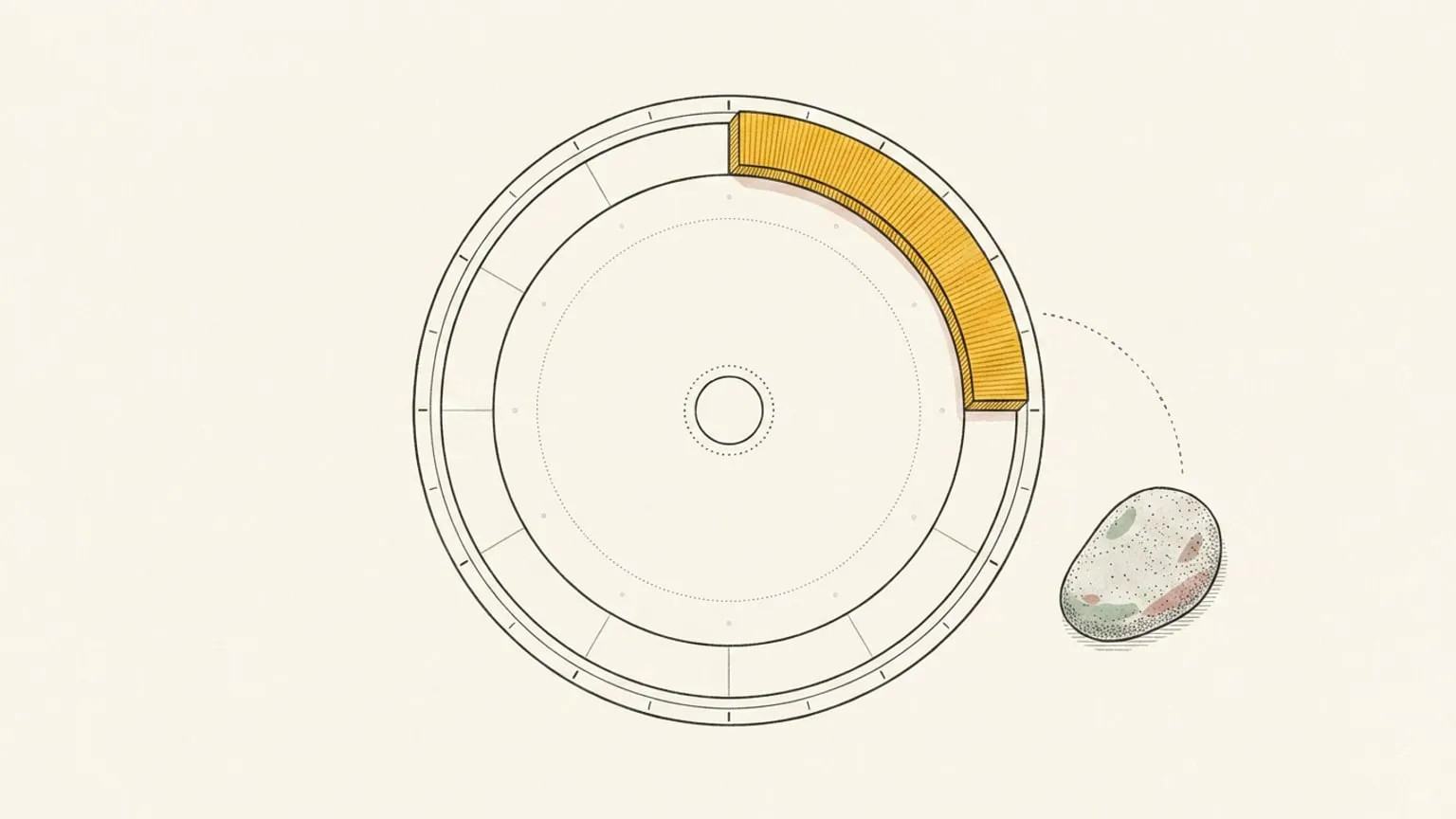
Time blocking and body doubling fix two different failures, which is why they work best stacked. Time blocking answers when: it gives the task you keep avoiding a real position in the day, so a moment exists when you would actually begin. Body doubling answers how you stay in it: another person in the room lends you the activation to start and the friction to keep going. Run them apart and each one leaks. Block your time and you can still work straight past your own boundary. Book a double with no block and the day eats the hour before the session exists. Together, the move is simple: draw the block, then fill it with a body.
The academic paper that named this cluster put both in its title: From Time Blocking to Body Doubling. That is not a coincidence. They are the two halves of the ADHD workday, and they need each other.
Two failures, one day
The failure time blocking targets is time blindness: you cannot feel how long things take or how much of the day is gone, so the un-startable task never gets a slot and the day fills up around it. Drawing the block is the fix, because you cannot feel the hour but you can see it.
The failure body doubling targets is task initiation: the gap between knowing what to do and moving. A person in the room supplies an external reason to start now, which matters when the internal one will not fire. When researchers coded 3,276 r/adhd comments, virtual body doubling was the single most-named focus strategy, ahead of headphones, timers, and time blocking itself.
Here is the catch the same paper recorded: several people blocked their time and then worked straight through their own boundaries. A block on its own does not hold you. That is the exact seam a body double fills, and it is why the two belong in the same hour.
The core move: block first, body second
The whole recipe is three steps, and none of them needs a tool that does not exist:
- Draw the block first. Pick the task you cannot start, and give it a real position and length on the day. One block, one job. On a round day you can see it fits next to everything else before you commit anyone’s time to it.
- Book the double to that start time. A Focusmate slot at the same start, a friend on a call, a co-working room, or a stream queued up. The block decides when. The double is what holds you in it.
- Close the loop when it ends. Mark the block as planned, changed, or not done, and name the one thing you finished. That is the step that makes tomorrow start from somewhere instead of from zero.
Everything after this is technique: how to run each half so the pairing actually holds.
Body-doubling techniques that hold
The form matters less than how you run it. Six things separate a session that works from an hour of two people ignoring each other:
- Name the one task out loud before you start. Not your list, not your week. The single thing for this block. It is the only interaction a session needs, and it turns a vague intention into a promise someone just heard.
- Match the length to the block, not the default. A 25-minute slot for one dreaded email. A 90-minute block for the report. The session is a container for the work, so size it to the work.
- Decide the camera on purpose. On camera is the strongest pull, because someone sees you start and finish. But if being seen makes you perform for an hour, that is a cost. A silent room or a stream gives you presence without a face.
- Agree to silence, or pick less connection. The most common way a friend double fails is that friends talk. Say up front that this is heads-down, or choose a form with less mutuality: a co-working room over a call, a stream over a partner.
- Pick the amount of person by the task, not your mood. The more a task scares you, the more presence you need. A booked partner for the thing you have avoided for a week; a passive stream for the admin you can almost start alone.
- End with a recap. Say what you finished, even to a room that cannot hear you. The close is what makes the hour count for the next one.
Time-blocking techniques that make room for a double
The block is not just a container. Draw it well and the session almost runs itself:
- One block, one job. A block that holds three tasks holds none of them. The double is there for a single thing; give it a single target.
- Put the un-startable task where you can see it fits. The reason you keep not scheduling it is that you cannot feel where it goes. A dial that shows duration tells you it fits before you book anyone’s time.
- Block the session, not the whole day. Wall-to-wall blocking has no slack, so one missed block cascades and the day collapses. Protect the double’s hour and leave the edges loose.
- Keep new, hard work off the audience. Being watched helps the known chore and hurts the unfamiliar problem that needs real thinking. Body double the admin; block the deep, new work separately, alone.
- Block for energy, not just order. Put the hard-to-start task where your energy actually is, then bring the body to that window. A double cannot rescue a demanding block dropped into your worst hour.
Give the block a rhythm
Inside a long session, a body double holds the room but not the pace. Focus intervals and focus mode supply that, both on Pro; a pause draws a real break on the dial rather than freezing a stopwatch, so break time stays visible. A microtasks checklist, included in Pro, gives you a first move that needs no decision, the same job the body double is doing from the other side.
Common mistakes when you combine them
The pairing breaks in predictable ways. Most are one of these:
- You block, then work past the boundary. The paper found people do exactly this. The block ends and you keep going, or it never really started. The double is the fix: an ending someone else can see holds the edge better than a line on a screen.
- You book a double with no block. No slot means no moment you would begin, so the day eats the hour and the session that was going to save your afternoon never happens. The block has to exist first.
- You over-block, then one miss cascades. A day packed corner to corner has no room to absorb a slip. Block the sessions that matter and leave slack around them.
Where a planner fits
Here is the disclosure. I make Reassign, a 24-hour circular day planner, and it does not have a body-doubling feature. A shared day, where a friend or Claude sits with you through a block, is on the roadmap, labelled Soon, and I am not going to pretend otherwise.
So the planner does exactly one half of this: the block. It gives the session a real position in the day, a rhythm inside the block, and a way to close the loop after, marking what happened so a good hour becomes a pattern. The body double comes from a person, or from one of the dedicated apps. That split is honest: a planner decides which block, a body double holds you in it, and neither does the other’s job.
The block and the body
The evidence is honest-sized: a lot of self-report, a couple of small studies, no trial. But both halves are cheap and low-risk, and the downside is an hour you would have spent not starting anyway. Time blocking answers when. Body doubling answers how you stay in it. Draw the block, book the body, close the loop.
If the missing half is the block, Reassign is free to try for 7 days. No card. Draw the day first, then find someone to sit beside you in it.
Frequently asked
- How do you combine body doubling and time blocking?
- Block first, body second. Give the task you keep avoiding a real position and length on the day, then book a body double, a Focusmate partner, a friend, a co-working room, or a study-with-me stream, to that exact start time. The block decides when you begin; the double holds you in it once you have. Then mark what happened, so a good hour becomes a pattern instead of a one-off. Every step works with tools that exist today.
- What are good body doubling techniques?
- Say the one task out loud before you start, so the session has a target. Match the session length to the block, not the app's default. Decide on purpose whether the camera is on, because masking costs energy. Agree to silence, or pick a less-connected form so you do not end up chatting. End with a recap of what you finished, even to a room that cannot hear you. And pick how much of a person you get by how much the task scares you, not by your mood that day.
- How long should a body doubling session be?
- As long as the block, not as long as the default. Match the session to the work: a 25-minute slot for one dreaded email, a 50 or 90-minute block for a report you already know how to write. Focusmate offers 25, 50, and 75-minute sessions for this reason. If the block is long, split it into shorter focus intervals with breaks between, so the session has a rhythm instead of one unbroken stretch you cannot hold.
- Do you have to have your camera on to body double?
- No, and you should decide it on purpose. A one-to-one video session with the camera on is the strongest pull, because someone sees you start and finish. But if being on camera makes you perform productivity for an hour, that is a cost, not rest. A silent co-working room with the camera off, or a study-with-me stream, gives you presence without a face. Match the form to how much being seen costs you today.
- What should you say at the start of a body doubling session?
- One sentence: the single thing you will do. Not your whole list, not your week, just the one task for this block. Naming it out loud is the only interaction a body-doubling session needs, and it works on a stranger, a friend, or an empty Discord room. It turns a vague intention to be productive into a specific promise someone else just heard.
- Can you body double without an app?
- Yes. A friend at the kitchen table, each doing their own thing, is the original form and still the most common. A cafe or a library is body doubling that nobody agreed to. A free study-with-me stream on YouTube or Twitch needs no account. The app is only there to book a stranger when you have nobody to sit with, or to add a start time you will not skip. The block, not the app, is the part that has to exist.
- Does Reassign do body doubling?
- No. Reassign is a 24-hour circular day planner, not a body-doubling app. A shared day, where a friend or Claude sits with you through a block, is on the roadmap and labelled Soon. What the planner does today is the time-blocking half: it gives the session a real place in the day, a rhythm inside the block, and a way to close the loop after. The body double comes from a person or one of the dedicated apps.