Routines that survive a bad week
Routines fail with ADHD because they run on memory instead of cues. The real habit timeline, if-then plans, and how to build a routine you can see.

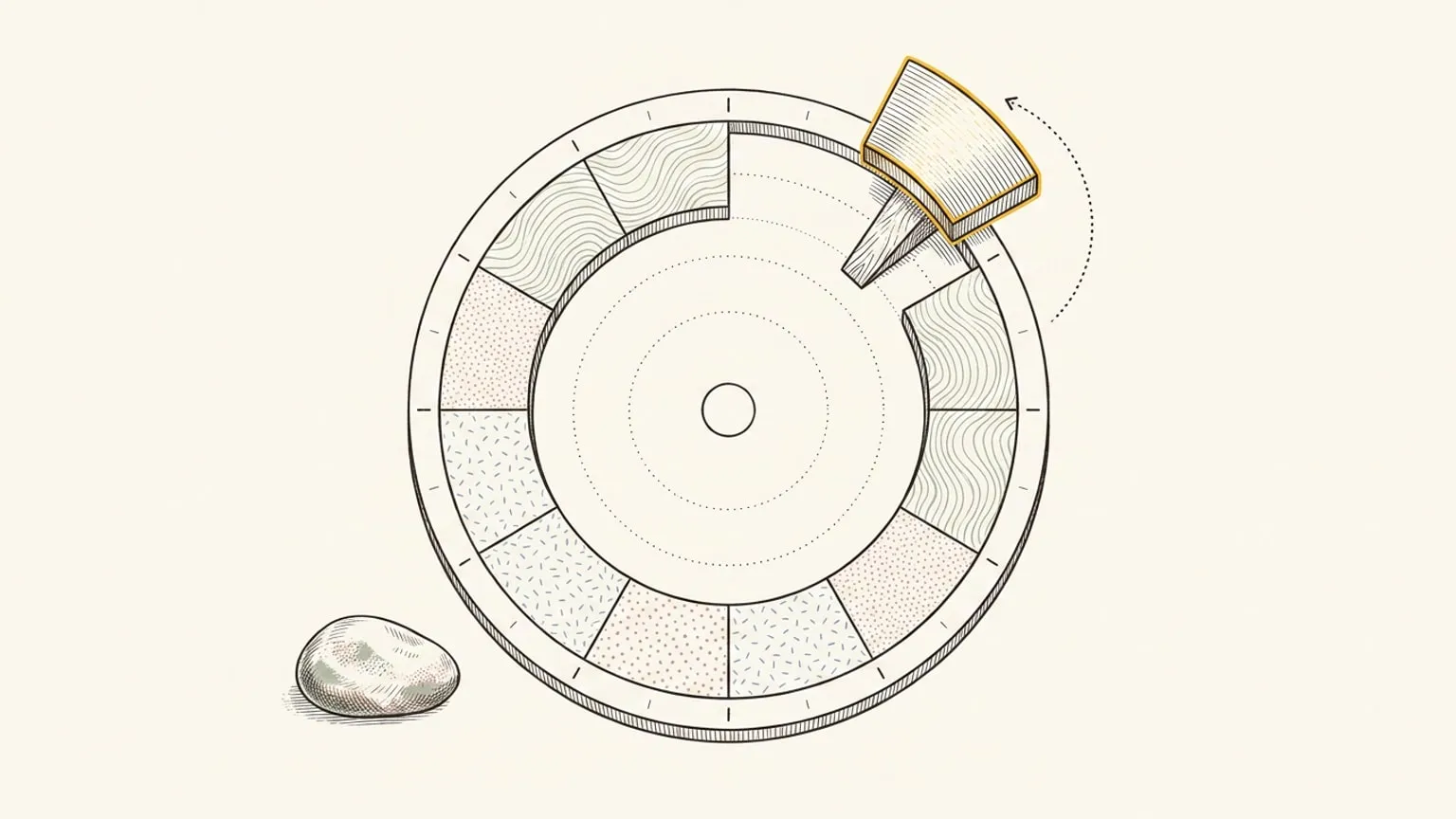
You designed it on a Sunday. Up at seven, water, twenty minutes of writing before email, gym at six. It was a good routine. It was the right routine, honestly, the one you would recommend to a friend. By Thursday it was gone, and you cannot point at the day it died.
The advice that arrives next is always about discipline, and it is always useless. Routines do not fail because you stopped wanting them. They fail because of how they were built.
Why do I struggle with routines even when I want them?
A routine is a sequence you no longer have to decide. That is the entire value of one: it takes a handful of small decisions and collapses them into a single run you can start without negotiating with yourself.
Getting there takes repetition in a consistent context. That phrase is doing real work. In the study that gave us the numbers everyone now quotes, Phillippa Lally and colleagues asked 96 volunteers to pick one eating, drinking, or activity behaviour and do it daily in the same context, for twelve weeks. Not just repeat it. Repeat it in the same slot, after the same trigger, until the trigger starts doing the remembering on your behalf.
ADHD interferes with the trigger, not the wanting. Two ways, mostly.
The cue never fires. A routine that exists as an intention lives in working memory, which is exactly where ADHD is least reliable. You have not forgotten that you want to write in the mornings. You have forgotten it at 7:15am, which is the only moment that counts.
And the slot drifts. “After breakfast” assumes you can feel when breakfast ended and that the next thing has not already swallowed twenty minutes. It assumes an internal clock that hums. Time blindness is what happens when that clock does not hum, and a vague anchor is the first casualty.
There is a third thing underneath both. Psychiatrist William Dodson describes ADHD as an interest-based nervous system: attention follows interest, novelty, and urgency rather than importance. A routine is importance with the novelty deliberately removed. By week two it is, by design, the least interesting thing you will do that day. That is not a flaw in you. It is a load-bearing property of routines, and any plan that ignores it is planning for week one only.
I make Reassign, a 24-hour circular day planner, so read the last section as a design argument rather than a neutral survey. The research in the middle is not mine and is linked.
Forget 21 days
Before anything practical, the number has to go, because it is quietly responsible for a lot of abandoned routines.
Twenty-one days did not come from a study. It came from a 1960 self-help book, Psycho-Cybernetics, by a plastic surgeon named Maxwell Maltz, who noticed that his patients took about three weeks to get used to their new face in the mirror. He also noted that a phantom limb tends to persist about 21 days, and that a new house takes roughly three weeks to feel like home. His actual wording was that it requires “a minimum of about 21 days” to shift a mental image. A minimum. Sixty years of motivational repetition turned a floor into a deadline, and dropped the fact that it was never about habits at all.
The real figure is 66 days, and the number that follows it matters more. In the Lally study, the median time to reach 95% of maximum automaticity was 66 days, with a range of 18 to 254 days. Asked about it later, Lally’s own summary was that how long habit formation takes is highly variable. Simple behaviours settled faster than complex ones. People differed enormously from each other.
So the honest answer to “how long until this is automatic” is somewhere between three weeks and eight months, and you will not know which until you are in it. That is less satisfying than 21 and much more useful, because it removes the failure that is not one. If you expect a routine to run itself by day 22 and it does not, the 21-day myth hands you evidence that you are broken. You are on day 22 of something with a median of 66.
What if I keep abandoning routines after a few days?
Here is the most useful sentence in that entire paper, and almost nobody quotes it: missing one opportunity to perform the behaviour did not materially affect the habit formation process.
A gap is not a reset. The curve does not go back to zero. Whatever you built over eleven days is still there on day thirteen.
Almost every tool built to help you says otherwise. That is the difference between a lapse and an abandonment, and it is largely a design choice rather than a fact about you: we made the full case for why planner apps get abandoned in week three separately, and guilt mechanics are the third mechanism in it. A streak counter is borrowed dopamine. It pays out during the weeks when you need no help and converts to a reason not to come back at exactly the moment you do.
So build for the restart, because the restart is the normal case rather than the failure case. Three things make it cheap.
Shrink to the smallest version that still counts. Not the twenty-minute writing block. Open the file. The point of a small version is not that it achieves much. It is that it keeps the context alive, and context is what the automaticity is actually attached to.
Keep the cue, cut the length. If the routine has to give something up on a bad week, give up duration, never the slot. A five-minute version at the right hour preserves the thing you are building. A full-length version at a random hour does not.
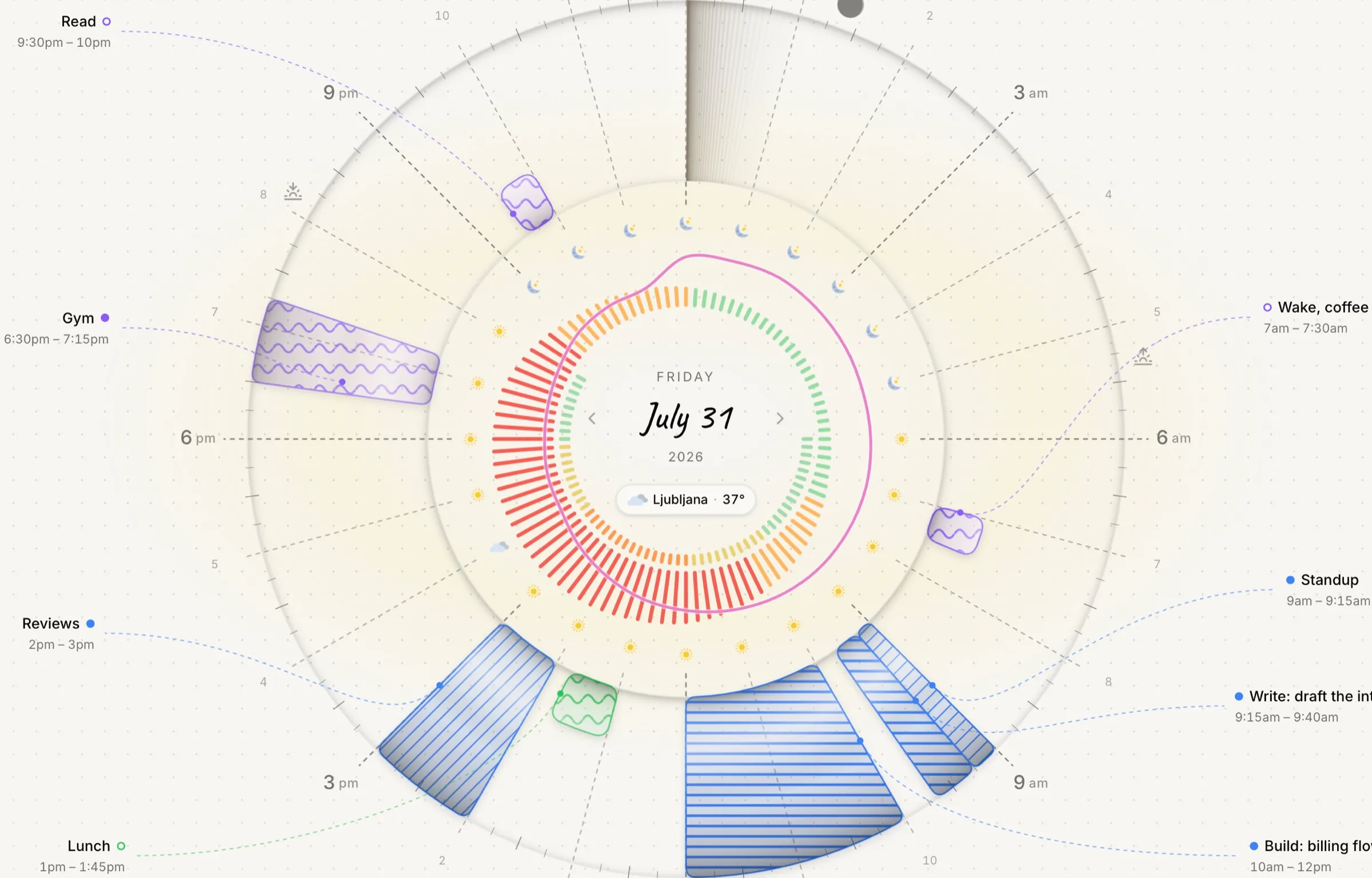
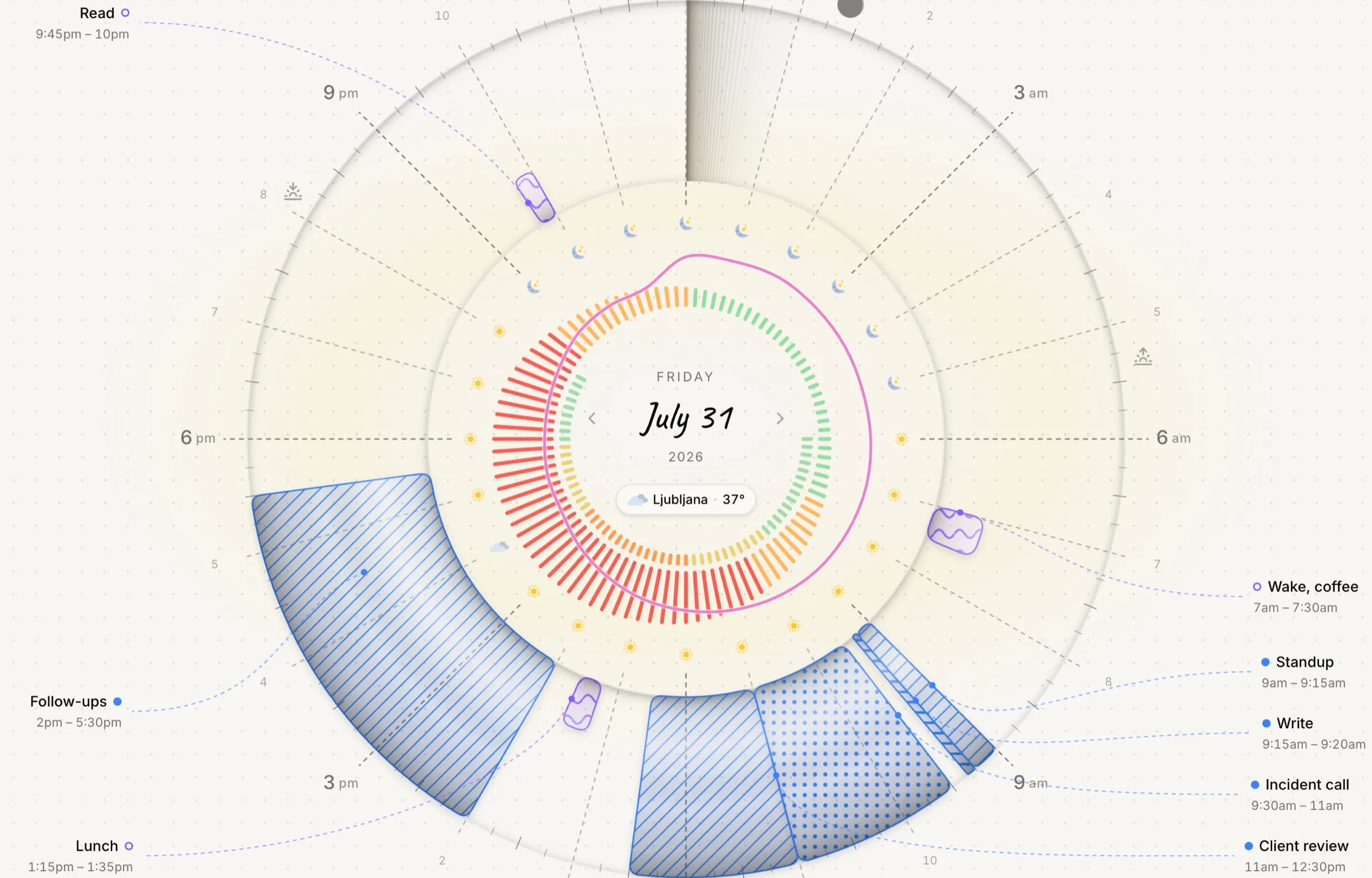
Make coming back free. No archaeology session, no backlog of red, no apology. If reopening the tool means confronting a ledger of everything you missed, you will not reopen the tool, and the routine dies of accounting rather than of difficulty.
How do I remember to follow a routine?
You do not. You arrange for something other than your memory to do it. Two mechanisms have real evidence behind them, and they work best stacked.
The first is the if-then plan, which psychologists call an implementation intention: deciding in advance that if a specific situation occurs, then you will do a specific thing. Gollwitzer and Sheeran’s meta-analysis of 94 independent tests found a medium-to-large effect on goal attainment (d = .65). The mechanism is the interesting part: an if-then plan moves the work from remembering to noticing. You are no longer trying to retrieve an intention at the right moment. You are waiting for a cue you have already delegated the decision to.
This has been tested in ADHD specifically, though mostly in children, which is worth saying plainly rather than glossing. Gawrilow and Gollwitzer found that children with ADHD who furnished a suppression goal with implementation intentions inhibited an unwanted response on a go/no-go task at the level of children without ADHD. Later work replicated a benefit on delay of gratification across inpatient and outpatient samples. The adult literature is thinner, so treat if-then plans as well-founded and promising rather than settled, and treat none of this as clinical advice.
The second mechanism is older and blunter: put the cue outside your head. Russell Barkley’s prescription for ADHD is two words, externalise time, and it generalises past time to anything you are relying on an internal signal to supply. An intention is invisible. A cue in the world is not.
Stack them and the shape of a workable routine falls out. An if-then plan whose if is something you can see. Not “in the morning,” which is a feeling. “The block after the 9am standup,” which is a shape sitting on a dial where your eyes already go. This is the same reason time blocking beats a list for the same work, and it is most of the answer to getting a single task started: the decision has already been made, and all that remains is to notice.
Can routines ever feel automatic with ADHD?
Some will. Some will not. The useful move is to build a plan that does not depend on which.
The automaticity curve in the Lally data is asymptotic: it climbs fast early, then flattens. The gain from repetitions 40 through 60 is much smaller than the gain from the first twenty. What predicted the climb was repetition in a stable context, not effort or motivation. Which points somewhere specific: chase context stability rather than willpower. Same hour, same order, same trigger, even when the content of the routine is dull.
For the rest, the ones that never quite go automatic, the framing needs to change rather than the effort. A routine that lives permanently outside your head is not a failed habit. It is a working prosthetic. Nobody describes glasses as a failure of eyesight training. A morning sequence that still needs to be visible on day 200 is doing its job on day 200.
And be selective. You cannot bootstrap six routines at once, because each one is competing for the same scarce cue-noticing capacity. One at a time, anchored to something that already happens reliably, is slower on paper and much faster in practice.
What tools can help?
A tool earns its place in a routine three ways. It shows the cue where you are already looking. It repeats without you rebuilding it. And it costs nothing to come back to after a gap.
That is what Reassign is built to do. Your day sits on one 24-hour dial, so a routine has a visible shape rather than a row in a list: the same block, at the same hour, in the same place on the ring every morning. The cue is not a notification you will dismiss. It is the geometry of the day.
Repetition is handled for you. Recurring events (Pro) repeat a block daily, on weekdays, weekly, monthly, or yearly, and editing one asks whether you mean this occurrence, all future ones, or the whole series, so a one-off exception never dismantles the routine. Copying the shape of one day onto another uses multi-select, also included in Pro. You can repeat a routine or copy a day without redrawing each block.
For routines that are really a short sequence, put the sequence inside the block. Microtasks are an ordered checklist attached to a single block, and writing them by hand and drafting with AI are included in Pro. On a repeating block the list is shared across every occurrence while the ticks stay on the day you make them, so a morning routine keeps one list you wrote once and each morning starts fresh with nothing to reset. If what you want instead is a runner that reads each step aloud on a timer, that is a different kind of tool, and the Routinery comparison sets the two side by side.
Two things help you put the routine somewhere it can survive. The energy curve (Pro) draws a per-hour estimate around the ring, so you can anchor a demanding routine to an hour when you are likely to be sharp instead of one that only looks good on paper. And the morning brief email sends the real dial to you, which means a day you never open is still a day you saw.
Then the part that decides whether any of it survives month two. Reassign ships no streaks, no badges, and no overdue counts. Miss three days and the dial shows today. Nothing broke, nothing reset, nothing is waiting for an explanation. If you want to look at how the plan met the day, day reflection marks each block as happened, changed, or did not, and reads back honestly rather than as a score. Reflection on yesterday and earlier days is included in Pro.
None of this makes a routine automatic. Nothing does, on a schedule you can name in advance. What it does is remove the two things that actually kill routines: a cue you had to hold in your head, and a returning cost you could not face on a Thursday.
Build the small version. Put it where your eyes are. Come back without paying for the gap.
Frequently asked
- Why do I struggle with routines even when I want them?
- Because wanting is not the mechanism. A routine runs on a cue: repetition of the same behaviour in a consistent context, until the context starts doing the remembering. ADHD interferes at the cue, not at the wanting. The trigger fails to fire because it lives in working memory, and the slot drifts because time blindness makes vague anchors like after breakfast unreliable. A routine built on remembering to want it is built on the one thing that is not there.
- How do I remember to follow a routine?
- You arrange for something other than memory to remember. Two things have evidence behind them. If-then plans, where you decide in advance that if a specific situation occurs, you will do a specific thing: a 2006 meta-analysis of 94 independent tests found a medium-to-large effect on goal attainment. And external cues: a visible marker in the world instead of an intention in your head. Combining them works best, so make the if half of your plan something you can actually see, like a block sitting at the same hour on a day planner, rather than something you have to feel.
- What if I keep abandoning routines after a few days?
- Then stop treating a gap as a reset, because the research does not. In the Lally et al. 2010 habit study, missing one opportunity to perform the behaviour did not materially affect the habit formation process. The curve does not start over. What makes abandonment permanent is usually the cost of coming back: a broken streak, a wall of red, a system to rebuild first. Shrink the routine to the smallest version that still counts, keep the cue, and make sure returning costs nothing.
- Can routines ever feel automatic with ADHD?
- Some will and some will not, and a good plan does not depend on which. Automaticity in the Lally study followed an asymptotic curve driven by repetition in a consistent context, with a median of 66 days and a range of 18 to 254. So chase context stability rather than effort: same hour, same order, same trigger. For the routines that never go automatic, an external scaffold is not a failed habit. It is a working prosthetic, and it can stay permanently.
- What tools can help me build a routine?
- A tool helps a routine in three ways: it shows the cue where you are already looking, it repeats without you rebuilding it, and it costs nothing to come back to after a gap. Reassign does this on a 24-hour dial: a block sits at the same hour every day so the routine has a visible shape, recurring events repeat it for you on Pro, and microtasks let one repeating block carry a checklist that starts fresh each morning without resetting anything by hand. There are no streaks, no badges, and no overdue counts, so a missed week breaks nothing.