The switch that will not flip
ADHD activation is the energy it takes to cross from still to moving: the switch that will not flip on demand. What task activation is, and how to lower it.

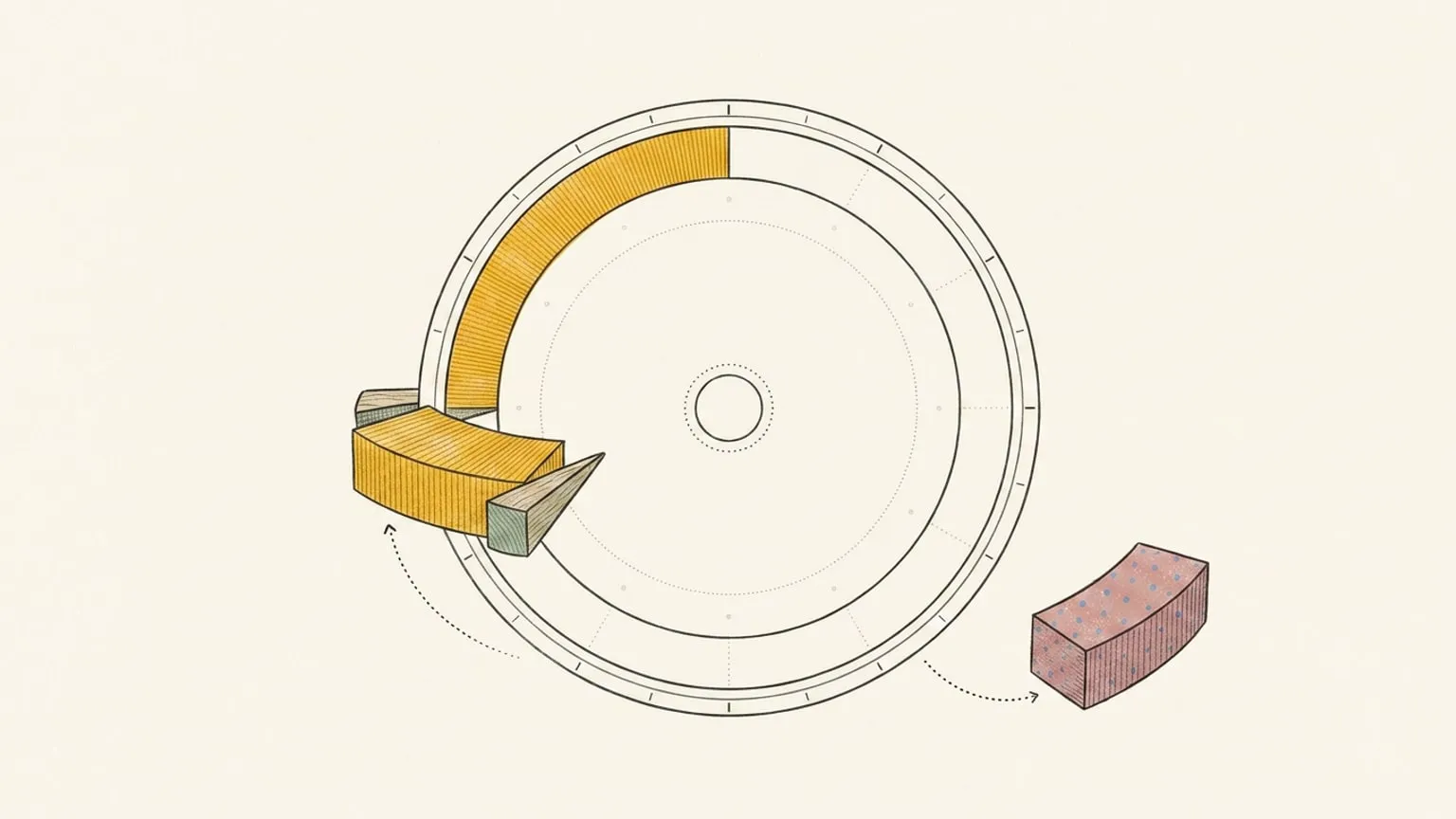
You planned the day. The task is on it, at an hour you kept free, and you know exactly how to do it. You are sitting in front of it right now.
And nothing happens. Not because you decided against it, and not because something interrupted. The gap between being ready and being under way just sits there, wide and quiet, and you cannot get across it.
That gap has a size, and the word for the size is activation.
What is ADHD activation?
Activation is the energy it takes to cross from still to moving. Every task has some, the way every hill has a height. For most of a life it is small enough that you never notice paying it: you think I should answer that and your hands are already on the keyboard, the crossing so cheap it feels like no crossing at all.
For a lot of people with ADHD that same crossing costs far more, and the cost is not covered by wanting the thing done. You can want it badly, picture the relief of it finished, understand every consequence of not starting, and still find the switch will not flip. Wanting is simply not the currency the crossing is paid in.
The word is borrowed from chemistry, and the borrowing is exact enough to be useful. A reaction that will happily run, that releases energy once it is going, still needs an initial push before it will start: its activation energy. Lower that push and the same reaction that would not budge suddenly runs on its own. A task works the same way. The problem was never that the work is impossible. It is that the push to begin it is higher than an ADHD brain can reliably self-generate.
Activation is not motivation
The first thing to clear away is the assumption that low activation means low motivation, because that assumption hands you the wrong tool every time.
Motivation is about wanting, and you are not short of it. The account of ADHD as “you just do not care enough” collides with the daily evidence: the caring is often the loudest part, sitting right next to the not-moving, which is exactly what makes it hurt. If more wanting were the answer, you would have solved this years ago, because you have never been short of wanting.
Activation is about the barrier, not the wanting. It is the height of the wall between you and the first move, and its height barely responds to how much you care. This is not a semantic nicety. It changes what you reach for. Chase motivation and you get pep talks, stakes, and shame, none of which lower a wall. Treat it as an activation problem and you start doing the one thing that works: taking bricks out of the wall.
Task activation is not task initiation, quite
Activation and task initiation point at the same wall from two sides, and it is worth holding the difference lightly rather than losing it.
Task initiation is the executive function itself: the switch in the brain that converts an intention into a first movement. Activation is the felt version of the same event, the amount of energy that switch demands and your inability to summon it to order. The distinction earns its keep because of where it puts your attention. Naming the broken faculty leaves you staring at something you cannot repair by trying harder. Naming the barrier points you at its height, and a height is a thing you can lower. So the rest of this is about the height.
There is a neighbouring failure worth not confusing with either. When several things could be next and you cannot choose between them, that is not activation, it is selection, and it has a different fix. Activation is the wall in front of the one task you have already chosen and still cannot begin.
Why the switch will not flip
The short version, because the full case with the studies lives on the task-initiation piece: the barrier is real and it is built from two things at once.
The first is executive function, the set of processes that let you hold a goal and act on it. Across the research it is measurably weaker in ADHD, though the honest reading of that literature is that the deficit is one component of the picture rather than the whole of it. The second is motivational in the neurological sense, not the effort sense: the brain’s dopamine reward pathway generates less pull toward a payoff that arrives later. Work whose reward you cannot feel now supplies little of the push that starting quietly runs on in other people.
Put those together and the wall stops looking like a character flaw. A task with no immediate payoff has to be started on something other than the wanting of it, and the thing you are short of is exactly the thing every productivity article tells you to summon. Which is why the useful move is never summon more. It is need less.
Two honest boundaries, the same two that belong on anything like this. This is planning content, not clinical content: if low activation is costing you jobs, deadlines, or relationships, that belongs in a conversation with a clinician, and no planner is a substitute for one. And nothing below flips the switch for you. It lowers what the switch has to overcome.
How to lower a task’s activation energy
You cannot make the switch flip on command. You can shrink the barrier in front of it, brick by brick, until the push you can generate is finally enough to clear it. Five bricks worth pulling, each covered in more depth on the task initiation strategies piece.
- Take the decision out of the threshold. The single most expensive thing at the start of a task is the deciding, so decide in advance. An if-then plan formed the day before, naming the hour and the first move together, means nothing is left to work out at nine o’clock.
- Shrink the first move until it is physical. Not write the report but open the document and type the heading. Breaking the block into microtasks is this exact move: the point of the list is that the next action is already written down by the time you arrive.
- Empty the competing pile first. When six things are pulling at the same hour, the cost of starting one includes the cost of not starting the others. Getting the pile out of your head and onto the day leaves one thing in front of you.
- Borrow activation from another person. Body doubling, working alongside someone with no obligation to interact, is the strategy adults with ADHD name most often for exactly this, across thousands of accounts. The other person seems to supply some of the immediacy the task does not.
- Put the task where your energy can carry it. Some things only ever start at ten in the morning. Planning against your real energy curve rather than an idealised flat day removes a whole class of failed starts that were never about willpower.
None of these adds willpower, because willpower was never the missing ingredient. Each one takes something out from in front of the first move.
Where a planner lowers activation
No app flips the switch. The moment of activation happens in your body, in your room, and nothing on a screen reaches across that gap; anything promising otherwise is selling. What a tool can do is clear the things stacked in front of the first move, which is most of the barrier’s height.
Reassign is built around that, which is why it is a dial rather than a list. The whole day sits on one 24-hour circle, every block drawn to its true length, so a task has a visible when before it has anything else, and the if-then plan is written on the hour instead of remembered. The block then carries its own first move: open it, and the microtasks tell you what to do when you arrive, so the decision that usually sits at the threshold was already made yesterday. On the days when even writing that list is the wall, Pro can draft it from the block for you to accept or throw away. And the work lands at an hour you can plausibly do it in, not on a flat grid that pretends every hour is the same.
One thing is deliberately absent. No streaks, no badges, no confetti, no number turning red when a start does not happen. A guilt mechanic raises the barrier rather than lowering it: it works right up until the first day you miss, and then it quietly becomes one more reason not to open the app. The count on a block reads two of five. It never reads you failed. This is a large part of why so many ADHD planners get abandoned by week three.
One switch, tomorrow
Pick the one task you have been circling. Give it an hour on the day, and write its first microtask as something your hands could do in ten seconds without deciding anything. That is the whole move: the when is settled, the first step is physical, and both of them live on an hour you already committed to. You have not summoned any activation. You have lowered how much the task needed.
It will not work every time. Activation is a real barrier and it does not disappear because your planner is round. But the wall gets lower each time you take a brick out of it, and a plan that carries its own first move is one fewer decision standing between you and the switch.
Try Reassign Pro free for 7 days, no card required. Draw one block and give it a first step.
Frequently asked
- What is ADHD activation?
- Activation is the energy it takes to cross from still to moving: from sitting in front of a task to actually doing it. For many people with ADHD that crossing costs far more than it seems to for other people, and the cost is not paid by wanting the thing done. Borrowed from chemistry, activation energy is the push a reaction needs before it will run on its own; a task has one too, and an ADHD brain often cannot self-generate it. This is why the day can be planned perfectly and still not start.
- Is ADHD activation the same as task initiation?
- They point at the same wall from two sides. Task initiation is the executive function, the switch that converts an intention into a first movement. Activation is the felt version: the amount of energy that switch demands, and your inability to summon it on request. Talking about activation keeps the focus on the size of the barrier, which is the thing you can actually lower, rather than on a faculty you cannot simply will into working.
- What causes low activation in people with ADHD?
- Two things at once. Executive function, the set of processes that hold a goal and act on it, is measurably weaker in ADHD across the research. And the brain's dopamine reward pathway generates less pull toward a payoff that arrives later, so a task with no immediate reward supplies little of the push that starting normally runs on. The result is a real barrier, not a motivation problem: the energy you are short of is exactly the energy everyone keeps telling you to use.
- How do I lower the activation energy of a task?
- You cannot make the switch flip on command, but you can shrink what it has to overcome. Decide the when in advance with an if-then plan so no decision sits at the threshold. Make the first move physical and small enough to need no thinking. Clear the competing pile out of your head so one thing is in front of you. Borrow activation from another person by body doubling. And schedule the task at an hour your energy can plausibly carry it. Each one takes a decision out from in front of the first move.
- Does task activation get easier with practice?
- Yes, through repetition rather than willpower. A start you have to invent every morning stays expensive every morning, but a start that becomes part of a routine eventually stops asking to be decided at all. Once work is under way it supplies its own immediate feedback, which was the thing missing at the threshold, so the second half of any task is almost always cheaper than the first move into it.