Energy management vs. time management
Time management schedules your hours. Energy management decides which hours deserve the work. How the two systems differ, where each one fails alone, and how to plan a day around your actual energy curve.

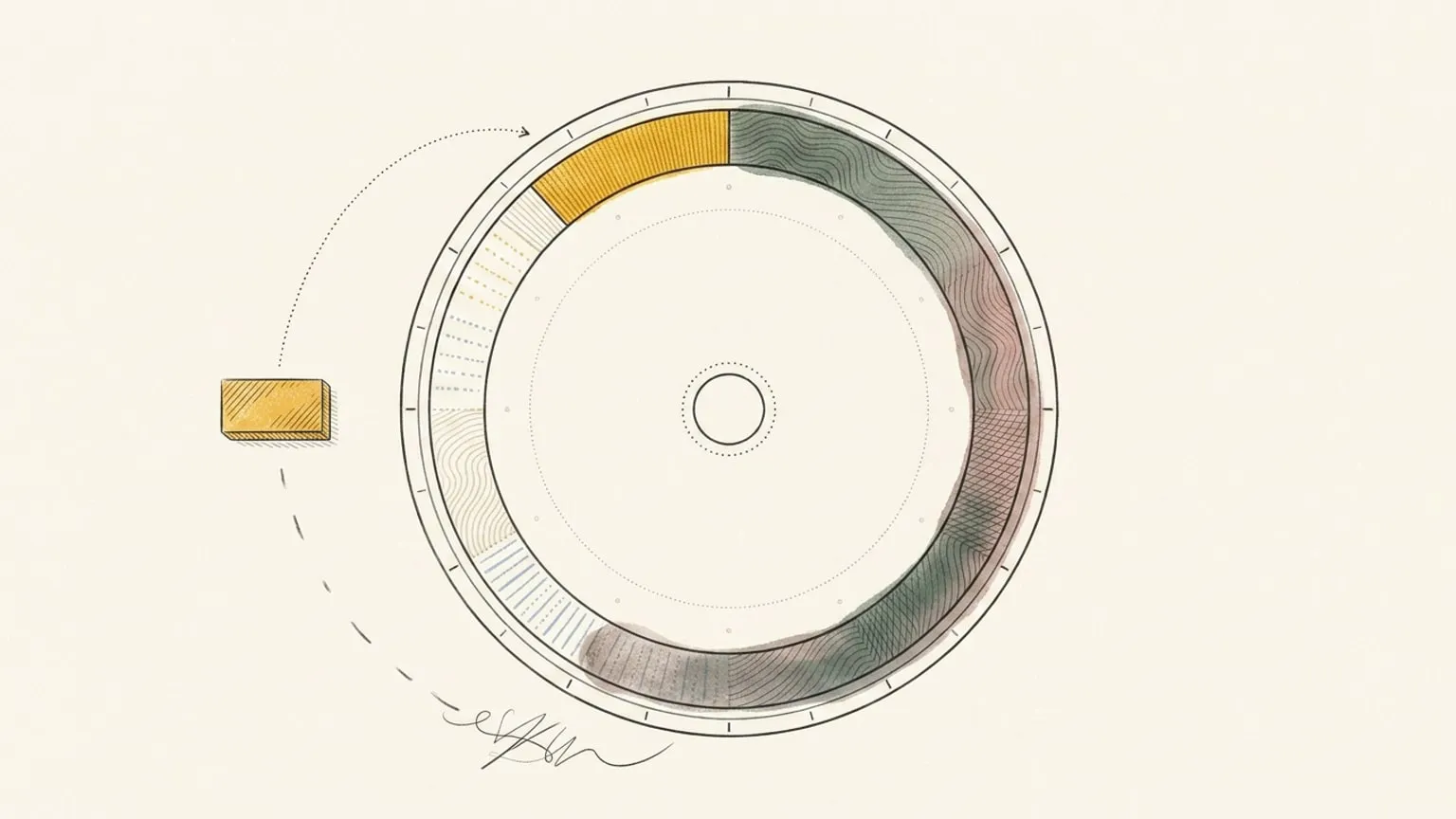
Two people block the same two hours for the same hard project. One schedules it at ten in the morning, two hours after waking, on the climb toward their daily peak. The other schedules it at three in the afternoon, in the trough their body clock digs after lunch. Same calendar discipline. Same time management. One of them ships the thing.
That gap is what energy management is about, and it is why the phrase keeps showing up next to time management as if you had to pick a side. You do not. But you do need to understand which job each one does, because they are not the same job.
Time management schedules hours. It cannot see into them.
Time management is the older discipline, and it works. Decide what matters, give it a slot, defend the slot. Time blocking is its sharpest form: every hour gets a job, and the day stops being a to-do list with a clock strapped to it.
But time management has one blind spot, and it is structural. A calendar treats hours as interchangeable containers. Sixty minutes at 10am, sixty minutes at 3pm: same size box, same weight in the grid. Every scheduling tool you have ever used is built on that assumption.
Your body has never once agreed to it.
Energy management is a scheduling discipline, not a wellness one
The phrase “energy management” has drifted toward wellness content: sleep more, walk more, drink water. Fine advice, none of it scheduling.
The useful version is narrower. Your alertness follows a curve across the day, and the curve is not a mood. Sleep scientists model it with two processes that pull against each other. Your circadian rhythm, the body clock, lifts and lowers alertness on a roughly 24-hour cycle. Sleep pressure builds for every hour you are awake and drags the line down. Add them up and you get the shape you already know from the inside: a climb to a late-morning peak, a real dip in the early afternoon, a second wind in the early evening, then the fade.
Two things about that shape matter for planning. First, it is predictable: the whole curve anchors to the midpoint of your sleep, so a night owl’s peaks land hours after an early riser’s, in a way you can actually compute. Second, it is not optional. The afternoon dip arrives whether or not you ate lunch, and no amount of calendar discipline reschedules your biology.
If you have never seen your own curve, the free circadian rhythm calculator draws it from just your usual bedtime and wake time: peaks, dip, and the mid-sleep point that anchors them, on a 24-hour dial, in the browser, no signup. It is a prediction, not a measurement: the average curve for your sleep times, not a reading taken from your body.
Matching work to hours, not just hours to work
Once you can see the curve, energy management collapses into one move: match the cost of the work to the capacity of the hour.
- Peaks carry the expensive work. Deep work, writing, hard problems, the decision you keep deferring. The late-morning peak is the obvious slot. The early-evening peak is the one most people waste, because the afternoon dip convinced them the day was over.
- The dip carries the cheap work. Admin, email, tidying, errands, the call you can do on autopilot. A dip spent on low-stakes work is not a wasted hour. It is a peak protected.
- Meetings go where they cost least. A demanding meeting sits better in the late morning than at four, when both sides are running on fumes.
None of this replaces time management. It feeds it. Energy decides which hour deserves the work; time blocking is still how you protect that hour once you have decided. A plan with energy and no schedule is a mood. A schedule with no energy behind it is a list of appointments you will be too tired to keep.
Why this is hard to do in a normal calendar
Try to practice this in a standard calendar and you hit the blind spot again: the grid shows you free and busy, nothing else. You end up holding the curve in your head and doing the matching arithmetic every time you drag an event.
This is the reason Reassign draws energy on the planning surface. The app is a 24-hour circular day planner, and its Energy layer wraps a per-hour curve around the same ring your blocks sit on: green where focus comes easy, red where you would be fighting yourself. When a block sits against its own slice of the curve, “should this go here” stops being arithmetic and becomes something you can see. That layer is the calibrated version of the calculator above: built from your actual logged sleep, bent by the caffeine and naps on your day, and part of Pro. The full write-up covers what it draws and why.
And if your curve sits hours away from the average one, which is common with ADHD, the matching matters more, not less: the ADHD energy management piece goes deep on finding peaks that do not match anyone’s office hours.
The honest verdict
Energy management versus time management is a false fight. Time management without energy schedules the right work into the wrong hours and calls the resulting exhaustion a discipline problem. Energy management without time knows exactly when you are sharp and protects none of it.
Use them in order. Find the curve. Match the work to it. Then block the time and defend it. The curve tells you where the good hours are; the calendar is how you keep them.
Frequently asked
- What is the difference between energy management and time management?
- Time management allocates hours: what happens, when, for how long. Energy management allocates capacity: which hours can actually carry demanding work. Time management treats every free hour as equal. Energy management knows a 10am hour and a 3pm hour are different resources, even when both are empty.
- Is energy management better than time management?
- No. It is upstream of it. Energy tells you which hour deserves the hard work; time blocking is still how you protect that hour once you know. A plan with energy and no schedule is a mood. A schedule with time and no energy is a list of appointments you will be too tired to keep.
- How do I figure out my energy levels during the day?
- Start from your sleep timing. The midpoint of a normal night anchors your body clock, and your alert hours sit at a fairly predictable distance from it: a peak in the late morning, a dip in the early afternoon, a second peak in the early evening. A free circadian rhythm calculator can draw the curve from your usual bedtime and wake time. Then check it against a few days of honest notes.
- Why am I exhausted even when I manage my time well?
- Because a well-managed calendar can still be scheduled against your biology. If the hardest work lands in your afternoon dip and the meetings eat your morning peak, every task costs more energy than it should. The fix is not more discipline in the same slots. It is moving the demanding work into the hours that can carry it.
- What should I schedule in an energy dip?
- Work that runs on rails: admin, email, filing, errands, routine calls. The dip is a scheduled event, not a failure. Giving it low-stakes work protects the peaks on either side, which is where the work that needs your full head belongs.