Time blindness in college: when the timetable disappears
Managing time blindness in college? Build study blocks around classes, break assignments into dated steps, and try a worked schedule with room for delays.

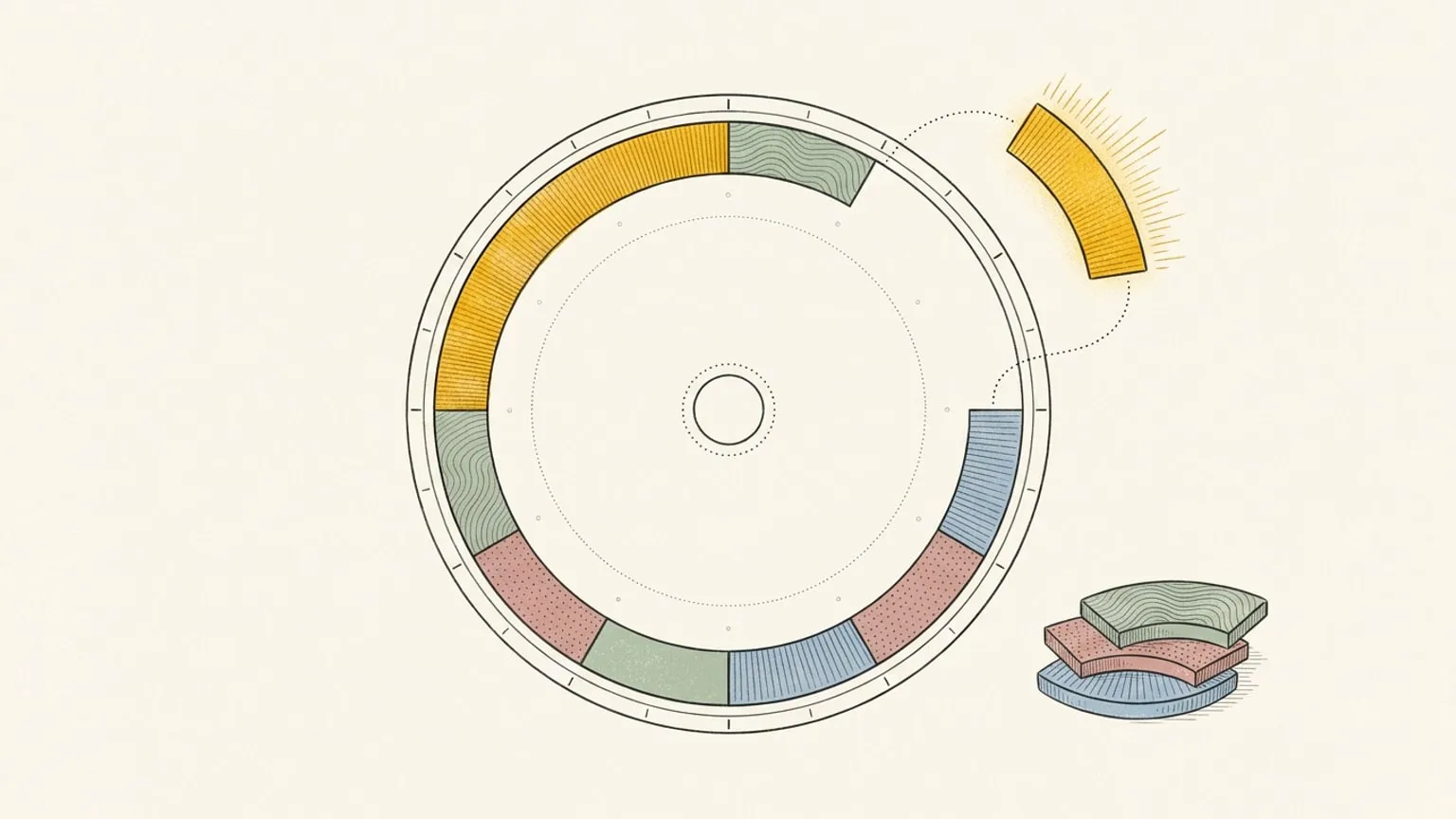
The paper is due in six weeks. Plenty of time. Then it is 2am the night before, and you are still opening the reading list. The weeks between never made it onto a plan.
If that feels familiar, time blindness may be part of the problem. College can make time-management difficulties more noticeable: fewer reminders, longer deadlines, more hours you have to organize yourself. Start by giving those hours a visible shape.
What time blindness means
Time blindness describes difficulty judging how much time has passed, how much is left, or how long a task will take. It is often discussed in relation to ADHD, but it is not a diagnosis on its own. Our guide to what time blindness is covers the definition and background.
NIMH lists poor time management and planning among difficulties adults with ADHD can experience. It also explains that symptoms can change with age and that treatment and support can help. A planner is one practical support, not a treatment for ADHD.
The executive-function cliff
At school, the timetable does some of the planning for you. Bells mark transitions. Teachers remind you about assignments. Family may help you leave on time.
College can remove several of those supports at once. Remember the deadline. Start the reading. Estimate the essay. More of that work now falls to you.
The executive-function cliff is a way to describe that jump in demands. It is not a separate diagnosis or a transition every student experiences the same way. If the change is affecting your studies, contact your campus disability or learning-support service. Ask what help is available with planning and coursework.
What it looks like as a student
You might recognize some of these patterns:
- The eight-week deadline. It feels distant until there is too little time left to finish comfortably.
- Reading with no bottom. A chapter takes the afternoon, but you planned for an hour.
- The gap that evaporates. Ninety free minutes between lectures feels too short to start anything. Then the next lecture begins.
- The recurring all-nighter. Urgency becomes the cue to start work, even when you meant to begin earlier.
- A term with no shape. You know the submission dates, but have no study sessions booked between now and then.
A syllabus is not a plan
A syllabus tells you what is due and when. It does not reserve the hours to do it. A short reading and a 4,000-word essay can each occupy one line, even though they need very different amounts of work.
Keep the syllabus as your source of deadlines. Add a time plan beside it: when will you read, outline, draft, and edit? Drawing those blocks to scale makes the load easier to compare. That is the idea behind why a day is round.
How to manage time blindness as a student
Try these six steps on your next study day. Use paper, a calendar, or a dial you can update easily.
- Put the fixed things down first. Classes, labs, shifts, meals, sleep, and travel. Add study blocks only after you can see the gaps.
- Size study blocks to real duration. If the last chapter took 90 minutes, use that as your starting estimate for the next one. Draw it to scale so a longer task takes more space. Record how long you actually spend, then adjust. This is time blocking, aimed at study.
- Give the term a shape now. Keep the final deadline visible. Work backward to date the outline, draft, and edit. Then choose one small action for this week: read the brief and write three questions, for example.
- Study where your energy sits. Put demanding reading at a time when you usually think clearly. A free slot at 4pm may fit admin better. Learn more about energy-based planning.
- Skip the streaks. If streaks make returning harder, use a plan without them. Missed Tuesday? Choose a new time for that block. Our approach to planner abandonment leaves out badges and guilt counters.
- Buffer everything. Try allowing 35 minutes for a 20-minute walk. Leave room around study sessions too. Adjust those buffers using what actually happens.
A study day with room for a delay
Here is an example you can adapt. The goal for the reading block is specific: read ten pages and write three notes for tomorrow’s seminar.
| Time | Plan |
|---|---|
| 10:00–11:00 | Lecture |
| 11:00–11:15 | Walk to the library |
| 11:15–12:00 | Read ten pages and write three notes |
| 12:00–12:15 | Buffer |
| 12:15–13:00 | Lunch |
| 13:00–13:30 | Open the essay brief and outline three questions |
If the lecture ends at 11:15, move the walk and reading forward 15 minutes. Reading now ends at 12:15, using the buffer while lunch stays put. If the delay is longer, shorten the reading goal or choose a later slot. Check fixed commitments before shifting anything else.
Afterward, note how many pages you read in 45 minutes. Use that result to size tomorrow’s block. You have a starting estimate grounded in your own work.
For help choosing the tool, see how to choose an ADHD student planner. If you are weighing a class timetable against a circular day view, Reassign compared with myStudyLife weighs the two.
A term you can see
Reassign puts classes, study, work, and sleep on one 24-hour dial. Each block is sized to its duration, so a two-hour lab takes eight times the space of a fifteen-minute walk. The now indicator marks the current time and past blocks fade.
With the default midnight-at-top orientation, a 9am lecture sits on the lower-right side of the ring. Add a study block in the gap after it and you can see how much space remains. Read more about using a circular planner with ADHD.
When a session runs long, you can move blocks and shift the rest of your plan. Check the next fixed commitment, use a buffer, and decide what still fits.
Try tomorrow on the free printable 24-hour dial, no signup. Or start a 7-day no-card trial in Reassign and add your classes and one study session.
Pro adds sync with Google Calendar, Outlook, and Todoist. Classes already on a supported calendar can appear on the dial; calendars you do not own are read-only. Direct university ICS-feed subscriptions are not supported yet.
Frequently asked
- Does time blindness get worse in college?
- It can become more noticeable when you have fewer reminders and more time to manage yourself. Classes may leave long gaps, while assignments have deadlines weeks away. That change in demands does not mean everyone's symptoms follow the same pattern. Start by identifying which support you lost and what could replace it.
- What is the executive-function cliff?
- It is a way to describe a sharp increase in self-management demands, such as the move from school to college. You may have to handle more planning, task initiation, and deadline tracking yourself. It describes a transition in support and expectations, not a separate diagnosis.
- How do students with ADHD manage time blindness?
- Try making time visible: put classes and shifts on a plan, size study blocks using past experience, break assignments into dated steps, and leave buffers. Check what actually happened and adjust the next plan. A visual planner is one support; campus support services and ADHD care can help with needs a planner cannot address.
- Why can't I start an assignment until the night before?
- A distant deadline can be hard to act on, but time blindness is not the only possible reason. An unclear first step or feeling overwhelmed can also get in the way. Try scheduling one small action this week, such as opening the brief and writing three questions. If this keeps disrupting your studies, ask your campus support service for help.
- Does time blindness go away after you graduate?
- Graduation does not automatically resolve time-management difficulties. ADHD symptoms and support needs can change with age and circumstances. Keep the strategies that help, adapt them to your new routine, and seek support when they are not enough.